Monday, November 28, 2022

THE CASH STUFF FOR THURSDAY, DEC. 1ST


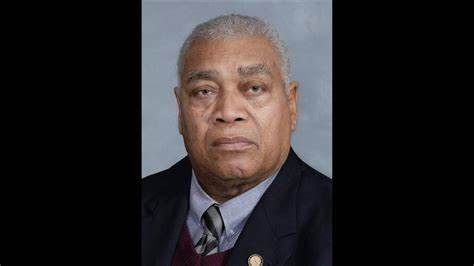
                                               STATE SENATOR MILTON "TOBY" FITCH, JR. 


WHAT HAPPENED TO 

THE BLACK VOTE

DURING THE MIDTERMS?

By Cash Michaels

Contributing writer


It’s a question that Democrats had better find the answer to prior to the 2024 presidential/NC gubernatorial elections.

What happened to the North Carolina Black vote during the November 2022 midterm elections?

By all accounts, turnout overall in North Carolina was lower in the 2022 midterms than in the 2018 midterm elections, despite predictions to the contrary initially. Fifty-three percent of the electorate voted in 2018, compared to just 51% in 2022, according to the North Carolina Board of Elections.

Part of the reason was a “depressed” voter turnout by the Democratic base, according to political analyst Thomas Mills.

“…African American voters had the lowest turnout since before Barack Obama won the state in 2008,” Mills stated in his Politics NC newsletter last week. “Overall, turnout was below 2018 by more than two percent despite a Senate race this year and a Blue Moon election four years ago.”

What is striking is that this low midterm election turnout contrast to the 75% of eligible voters casting ballots  in the 2020 presidential election, which saw more than 5 million North Carolinians go to the polls.

The results of the 2022 midterms were made official on November 29th, so absolute final statewide numbers will take some time to be made available, but a few things are clear just based on the unofficial county-by-county tallies. Republicans were able to win a supermajority in the state Senate, fall one vote shy of a supermajority in the state House, take the majority on the state Supreme Court, maintain a majority on the state Court of Appeals, and essentially wipe out Black representation in Eastern North Carolina, because white, older Republican voters in the state’s rural voting districts “showed up, and showed out.”

But what was most surprising to many observers was that even rural counties that logged more African-American voters than white, went Republican, even though there was a moderate Black female Democrat running at the top of the ticket.

“While Cheri Beasley ran a competent [U.S Senate] campaign, raising the money to be competitive and keeping the race close until the fall, she failed to engage and motivate the base,” stated political analyst Thomas Mills. “She ran a cautious campaign in a year when she needed to take risks, either coming out more forcefully for some of her more controversial positions like legalizing marijuana or taking much harder jabs at Budd down the stretch.”

“Mills continued, “According to exit polls, her sensible policy positions won over independent voters by six points, but she still lost because Republican turnout substantially beat Democratic turnout.”

In short, Cheri Beasley failed to energize Black voters, especially young Black voters. True she did very well in urban counties. However, only Wake and Durham had above average turnout. Guilford and Forsyth had average, while Mecklenburg, Cumberland and Pitt were lackluster.

In rural Anson County for example, where President Barack Obama won in his 2012 reelection campaign, Democrat Beasley fell short.

And as noted before, Republicans were able to flip a number of Eastern North Carolina Black Democrat seats in Wilson, Nash, Pasquotank and Vance counties, sending veterans like state Sen. Milton “Toby” Fitch home.

Part of the reason was a redrawing of the voting district lines. But another reason is the fact that many of North Carolina’s historically African-American counties are losing Black population and getting older, while younger whites and Hispanics are moving in.

Looking at the county numbers, observers say the 2022 midterms skewed older and whiter than average.

So why was the 2020 election so large, and the 2022 election so small? Most observers say the Trump factor played a role. A majority of voters cast ballots because the former Republican president gave them a reason to - pro and con.

Many observers hoped that the U.S. Supreme Court’s controversial ruling against Roe v. Wade would be the same motivator. But while it may have been elsewhere in the country, it had little effect in North Carolina.

With polarizing Black Republican Lieutenant Governor Mark Robinson all but announced for governor in 2024, in addition to what is assured to be a hot national contest for president, perhaps involving Vice President Kamila Harris, North Carolina Democrats have to find more reasons to energize African-American and youth voters.

With Republicans in charge of almost the entire state governmental apparatus of North Carolina, observers say that will be a tough challenge indeed.

-30-
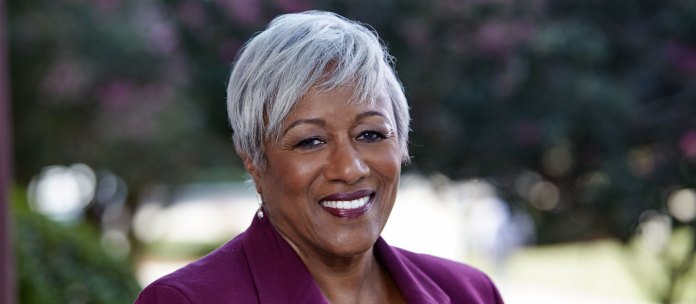

                                        SHAW UNIVERSITY  PRES. PAULETTE DILLARD

SHAW U FILES FEDERAL

COMPLAINT OVER 

S.C. HIGHWAY STOP

By Cash Michaels

Contributing writer


         Did the Spartanburg County, S.C. Sheriff’s Dept. violate the civil rights of a busload of Shaw University students during an Oct. 5th traffic stop search for drugs? University President Paulette Dillard says “yes,” while the authorities in South Carolina say absolutely not.

The question is in the hands of the U.S. Justice Dept. now as the historically-black institution announced just prior to the Thanksgiving holiday that it had filed a complaint with federal authorities to review the matter.

It was October 5th when a contract bus that the university hired to transport 18 Shaw students and two advisers, all Black,  from Raleigh to an economic conference in Atlanta, Ga., was stopped and searched for illegal drugs by two Spartanburg Sheriff’s Dept. deputies with a canine.

Pres. Dillard, flanked by outside General Counsel Atty Dan Blue III and other Shaw Administration officials, told reporters during a November 21st press conference, that she doesn’t see the justification for a drug search to emanate from a simple traffic stop without probable cause.

S.C. authorities have claimed that the bus was stopped because the driver was weaving on the highway. They said deputies had concerns that the driver was falling asleep, and they couldn’t see inside the bus because it had tinted windows. So any accusation, authorities said,  that the bus was stopped because it was carrying Black students is wrong.

But Pres. Dillard countered that every vehicle stopped for a traffic infraction on that S.C. highway isn’t searched for illegal drugs. So why was the Shaw bus searched, if racial profiling was not involved?

Spartanburg Sheriff Chuck Wright has said that of the 39 vehicles stopped by his deputies on that highway recently , at least one contained $500,000 in contraband, thus the value of the random selection otherwise known as “Operation Rolling Thunder.”

“If anything we’re ever doing is racist, I want to know it, I want to fix it and I want to never let it happen again,” Wright said during his own presser Nov. 1st. “But this case right here has absolutely nothing to do with racism.”

Wright, along with Cherokee County Sheriff Steve Mueller, and the two deputies involved in the search, screened body cam video of the Shaw bus incident, pointing out how courteous and cooperative the driver, Shaw advisers and students were when their bus was boarded.

The bodycam also showed the police dog sniffing through the luggage in the bus under carriage. Only one bag reportedly caused the dog to react, and it contained some prescription medicine, and a donut.

The deputies made no arrests, and the bus was allowed to proceed  on to Atlanta.  The same bus returned without incident days later.

In her Nov. 21 remarks, Pres. Dillard praised the traveling Shaw students for maintaining their composure during the incident.

Shaw Student Body President Mariah Williams also expressed pride in the manner which those students comported themselves, but then added that “now is the time for accountability.”

“The fight for civil rights is an ongoing necessity,” Ms. Williams added, lamenting how unfair it was for S.C. deputies to assume the worst of the traveling Shaw students just because they were Black.

Williams also reminded all that Shaw University is the birthplace of the Student Nonviolent Coordinating Committee, or SNCC, so seeking justice where there is none is an integral part of its history.

Atty Blue III told reporters that the university submitted a formal request for a federal investigation on November 14th to the U.S. Justice Dept. Blue maintains that the highway search was a violation of Title Six and other civil rights statues.

Blue said that based on the bodycam footage and narrative of the traffic stop, the complaint maintains that there is no evidence of a lane violation by the bus driver on the interstate highway. Secondly, the students never provided consent for their bags in the bus under carriage to be physically searched, which the video shows also happened with at least three student bags. In fact, students did not know their bags were also being physically searched until they saw the law enforcement video weeks later.

And third, probably most importantly as Dr Dillard alluded to,  this traffic stop, as we learned,  was part of Operation Rolling Thunder, which is an operation that South Carolina conducts periodically each year and has done so for the last many years where they police the interstates, particularly using lane violations and traffic stops to seize illegal weapons and drugs, Atty Blue continued.

“More importantly, they seized currency last year. During this operation, they seized over $968,000. This operation is something that they continue to do and it's something that's alarming. It gives them every motivation to turn every traffic stop, every lane violation, every faulty turn signal, every busted tail light into an illegal search and seizure for which they're compensated and rewarded while people are traumatized and stopped during their travels. “

Blue said Shaw officials have submitted a complaint to the U.S. Justice Dept. for review, which should then forward it to the appropriate team or agency within for resolution. He added that whatever the Justice Dept.’s final decision, Shaw University has done its part by standing up for justice.

                                           -30-


Thursday, November 17, 2022

THE CASH STUFF FOR THURSDAY, NOV. 24, 2022

 FBI DETERMINES WHERE

HBCU BOMB THREATS

ARE COMING FROM

By Cash Michaels

Contributing writer


The Federal Bureau of Investigation has narrowed down who they believe is responsible for a series of bomb threats earlier this year to over several historically Black colleges (HBCUs), including some here in North Carolina, in addition to dozens of high schools and junior high schools across the country, and on a separate occasion, 19 HBCUs between Feb. 8th and March 31st.

North Carolina Central University in Durham, Fayetteville State University in Fayetteville, and Elizabeth City State University in Elizabeth  City were among the North Carolina HBCUs affected.

Last week, the FBI announced that one stream of racially-motivated bomb threats to HBCUs  and churches has been linked to a boy, but because the suspect is a juvenile, his identity cannot be revealed  under federal statutes, and there are limitations “for charging under-age perpetrators with federal crimes.” According to the FBI, “This individual is under restrictions and monitoring of his online activities.”

Per another stream of racially-motivated bomb threats, the FBI has identified six suspects in their ongoing probe that were using “sophisticated methods to try to disguise the source of the threats” to 49 HBCUs.

And yet another stream of bomb or active shooter threats being investigated by the FBI involves over 250 colleges (including seven HBCUs) and more than 100 high schools, and several junior high schools, starting on June 7th. According to federal authorities, these threats were coming from foreign internet addresses.

FBI officials add that they have been running traces on many of the telephone calls, emails, text messages and other communications, tracking the bomb and active shooter threats overseas.

Since the beginning of the year, HBCU officials have called for greater security measures for their campuses from state and federal authorities.

-30-


NC NAACP WANTS CURRENT

CASE DECIDED BEFORE GOP

TAKES OVER NC HIGH COURT

By Cash Michaels

Contributing writer


Before the current 4-3 Democrat-majority NC Supreme Court turns in its robes on Dec. 31st to make way for the new 5-2 Republican-led state High Court, the NC NAACP would like for it  to finish up an important piece of  judicial business.

That “business” is the case, “NC NAACP v. Moore.”

Three months ago, Democrats on the current 4-3 state Supreme Court  ruled that in 2018, because the Republican-led NC House knew that at least 28 of it’s members had been elected from voting districts that the U.S. Supreme Court had previously ruled were part of a constitutionally illegal racial gerrymander, then that legislature probably did not have the authority to put a constitutional amendment mandating voter ID in the state Constitution.

But the Democrat majority sent the issue back to the trial court to study and get a definitive answer.

Legally, however, that order has to pass through the GOP-majority state appellate court before it gets to the Superior Court. According to published reports, the Appeal Court has been holding the order since September.

The NC NAACP  is now asking the state Supreme Court to issue a “writ of mandamus,” commanding the state appellate court to cease the delay, and send the mater back to the trial court for determination.

In its petition to the state Supreme Court, the NC NAACP presented evidence in the form of a September email from the clerk of the NC Court of Appeals proving that at least three Republican appellate court judges have no intention of sending the High Court order down to Wake Superior Court anytime soon.

“Given the additional factual inquiry the this court has ordered the trial court to conduct, additional delays in resolving this case may be inevitable, the NC NAACP petition states. “But there is no reason to allow the inexplicable delay caused by the Respondent Court of Appeals to drag on indefinitely. Blocking the trial court from fulfilling this Court’s order.” 

Needless to say, the sooner the High Court order is set to the Superior Court judge, who happens to be a Democrat, the sooner the outstanding issues can be decided prior to the current High Court losing its authority, legal observers say.

-30-


Monday, November 14, 2022

THE CASH STUFF FOR THURSDAY, NOV. 17TH

                                   NC ASSOCIATE JUSTICE MIKE MORGAN
                                        NC ASSOCIATE JUSTICE ANITA EARLS


WHAT DO NC GOP 

ELECTION VICTORIES 

MEAN FOR BLACK ISSUES?

By Cash Michaels

An analysis


The next time Democrats or progressive groups argue that a redistricting map is unfairly drawn by the Republican-led NC General Assembly, and want to take the issue to higher court, a Republican-led NC Court of Appeals or a GOP majority state Supreme Court will be waiting to hear the case.

That’s the scenario last week’s November midterm elections produced - a Republican supermajority in the NC Senate, four more Republican judges elected to the NC appellate court (now holding 12 of 15 seats), and two more Republicans elected to the NC Supreme Court, making that judicial body 5-2 Republicans to Democrats.

State Supreme Court associate justices are elected to eight-year terms.

The two Democrat associate justices are Michael Morgan and Anita Earls.

The year 2028 is the next time there will be an election for the state Supreme Court, but it will be a Democrat seat up for re-election.

“The ramifications are substantial,” former state Sen. Floyd McKissick, first vice chair of the North Carolina Democratic Party told WRAL News. “They are profound with the issues in front of the court and what it could mean in terms of rights.”

In short, the Republican-led legislature now truly has carte blanche’ to pass any legislation it desires, and in his final two years in office, Gov. Roy Cooper  can’t veto or do a thing about it, other than go to the bully pulpit.

The state House is one vote shy of a supermajority, meaning either the Republican majority there finds a moderate Democrat to join them, or wait for any Democrat House member to be absent in order to have the numbers to stop Gov. Cooper.

Either way, Cooper’s power over the GOP-led legislature is now tenuous at best.

If Common Cause NC or the NC NAACP wants to take Republican legislative leaders to court, they may get a favorable hearing in Superior Court, but if they lose there and dare to appeal to the Republican-laden state Court of Appeals or Supreme Court, the likelihood of a favorable hearing now is less likely.

With the heavily populated Republican domination of the Court of Appeals and the Supreme Court, there will be a more right-wing conservative application of North Carolina law than we have experienced in the past few years,” says NC NAACP Legal Redress Committee Chairman Irving Joyner. “Legal decisions which address the ability of people to vote, to participate in the political franchise and efforts to expand the powers of the Republican party will be resolved in favor of the General Assembly and the Republican leadership.”

Atty. Joyner continued, “You can expect a dedicated reluctance to expand the constitutional protections and rights of people in criminal cases and a loosing of restraints on the ability of the business community to exploit its dominance within the political and economic areas.”

“In education,” Joyner continued, “there will be continuing support for the General Assembly to short-change the financing of the quest for well-funded, quality and progressive educational initiatives. As a result of the Republican Party’s success in seizing control of the judiciary and the General Assembly, there will be a return to the “ole-school” conservative decision making that controlled North Carolina during the past “Jim Crow” era. None of this bodes well for African Americans, people of color and those individuals who are locked in low wealth communities.

Now take all of the above from the theoretical to the practical.

A case involving the voting rights of former felons was put off until 2023 by the current state Supreme Court. Now that case will be considered by the new Republican-led High Court.

The current Democratic-led state Supreme Court decided that funding should be transferred to low-wealth public schools per the recent Leandro decision. Will the new Supreme Court find a way to dash that decision?

And a final ruling was expected on a recent congressional redistricting case. A decision is expected in December, but if that doesn’t happen, it falls in the lap of the new High Court as of January 1. 2023.

This will be the new political reality for African-Americans and Democrats in the coming years.

-30-


                                                                CHERI BEASLEY


WHY, AND HOW CHERI BEASLEY

LOST HER BID FOR U.S. SENATE

By Cash Michaels

An analysis


Why, and how did Democrat Cheri Beasley lose her race for the U.S. Senate against Republican Congressman Ted Budd, 51-47 percent?

As we said back in May before the primaries about Beasley’s chances,  “Republicans are hopeful that voters in North Carolina’s rural areas will continue their rejection of Democratic candidates come election time.”

Couple that with the national Democratic Party basically ignoring the Beasley-Budd race in favor of the more high profile U.S. Senate contests in Pennsylvania and Georgia, meaning less campaign money flowing in from out-of-state; less defensive/offensive campaign advertising from Democrat political action committees; and almost no help from top-of-the-line Democratic firepower like former President Barack Obama (he did cut a late minute campaign commercial) or Oprah Winfrey, and the Beasley for Senate campaign can only be credited with fighting it’s heart out in a losing cause.

Cheri Beasley, the former chief justice of the NC Supreme Court,  was an exceptional moderate Democrat candidate, and she portrayed herself accordingly, promising to fight for regular people when it came to lowering health care costs, standing up for voting rights, and helping working families.

But again, as predicted, the Budd campaign and associated conservative groups, erroneously, and successfully portrayed Beasley as a former judge responsible for putting sex offenders and rapists back on the streets to commit crime, supporting Pres. Biden’s inflationary policies, and someone who can’t be trusted to look out for North Carolina families.

Beasley not only needed to defend herself, but be able to strike back at Budd, and she attempted to do so citing his record as a do-nothing-congressman who was only out for himself.

But it wasn’t enough. While Budd’s supporting groups flooded the airwaves with charge after baseless charge against Beasley, her campaign was not able to nearly match the onslaught dollar for dollar.

As we warned last May, “If Budd is to be successfully attacked, the Democratic Party and other outside groups will have to do it for Beasley.”

That really didn’t happen, and the Budd forces successfully defined Cheri Beasley in the minds of North Carolina voters before she knew it.

Beasley did well attracting votes from the state’s urban areas like Mecklenburg, Wake, Guilford and Durham.  But her electoral ship ran aground in the rural areas, where staunch Republicans and unaffiliateds bought Budd’s portrayal of her as a Democrat not to be trusted. Given former Pres. Donald Trump’s ringing endorsement of Budd, especially during a raucous rally in Wilmington last summer, that’s all the rural folks needed to hear to vote “no” on Cheri Beasley.

Ironically, Ted Budd did not have the campaign war chest that Cheri Beasley had - approximately $12 million to her $34 million - but in the end, he didn’t need it. With conservative outside groups forming the front line of attack, all Budd had to do was make sure he didn’t say anything stupid to get himself into trouble. That strategy helped him pull away from a tight contest in the final weeks of the campaign, and unofficially become the next U.S. senator from North Carolina come January.

As for Cheri Beasley, she will be at the center of probing questions as to why North Carolina Democrats are always losing to Republicans in big electoral contests.

In her case, the answer is she would have needed an Obama-like turnout across the state - in ALL areas of the state - in order to overcome the obstacles put before her.

But the history books on the midterm elections of November 8, 2022 will record that Democrat Cheri Beasley didn’t fail.

The national and North Carolina Democratic parties failed Cheri Beasley, who could have been the first Democrat since 2008 elected to the U.S Senate, and North Carolina’ s first African-American U.S. senator. -30- 


Sunday, November 6, 2022

THE CASH STUFF FOR NOVEMBER 10, 2023

                                                        CHERI BEASLEY


BEASLEY LOSES, GOP TAKES

MAJORITY ON HIGH COURT;

COLUMBUS COUNTY SHERIFF

REELECTED

By Cash Michaels

Contributing writer


She ran a close race for most of midterm Election night, but by 11:18 p.m. EST, Democrat Cheri Beasley fell short in her effort to become the first African-American elected to the U.S. Senate from North Carolina, unofficially losing to Republican Trump-backed Congressman Ted Budd, 51% to 47%.

Beasley was actually leading Budd substantially after  statewide polls closed, at one point as much as four percentage points thanks to early voting and mail-in absentee ballots. But once the Election Day voting  began to be counted, Budd was able to slowly by surely eat away at Beasley’s substantial lead, and ultimately unofficially win the race.

Once his victory is confirmed, Budd will take the seat being vacated by outgoing Republican Sen. Richard Burr.

During her concession speech, Beasley told an Election Night crowd in Raleigh, “ I’m so proud of the race we have run. I’m proud that all along we stayed true to our mission - that this would be a race about the people, not politics. Even when others didn’t, we believed in North Carolina - and I do still.”

She continued, “This isn’t the outcome we wanted, but we have made history in North Carolina. Tonight, I’m thinking of all those before me who blazed their own trails so that I could reach the end of this one.”

Beasley may go back to the Raleigh law firm she joined after she previously lost her race for NC Supreme Court justice. Many political observers have said if the national Democratic Party had given the Beasley campaign more resources, she could have pulled out a victory in this contest.

The other high profile North Carolina Democrat losses from midterm Election Night were for two seats on NC Supreme Court.

Republican Richard Dietz defeated Democrat Lucy Inman for an open sear 53% to 47%, while GOP’er Trey Allen was able to oust incumbent Associate justice Sam Ervin III 52% to 48% in unofficial results. The two Republican victories mean Republicans will now hold 5 - 2 majority.

In a major irony, former Columbus County Sheriff Jody Greene, with all precincts reporting, was unofficially re-elected  to the very office he was forced to resign just a few weeks ago after audio of him calling Black Sheriff Dept. employees “Black bastards” was made public.

Tuesday night, Republican Greene was leading his Democrat opponent Jason Soles unofficially 10,034 to 8, 458.

Columbus County District Attorney Jon David had earlier threatened file a petition to have Greene removed from office by a judge. He promised that is Greene were to win reelection, he would return to court to file a new petition.

In the races for the NC General Assembly, Republicans in the state Senate won a 30-seat supermajority in the 50-member body in unofficial returns, allowing them to override any veto from Gov. Roy Cooper. But the GOP fell one member shy of a supermajority in the state House, meaning they will need to convince a Democrat to join them if they was to override the governor there.

In Democratic congressional races, Democrat incumbents Alma Adams (12th) and Deborah Ross (2) both their races unofficially. They will be joined by newcomers Don Davis, who will take the 12th District seat now occupied by the outgoing G.K. Butterfield, Valerie Foushee, who replaces the outgoing David Price in the fourth District, and Wiley Nickel, who was victorious in the 13th.

That will make five Democrats on North Carolina’s Congressional delegation.

-30-


GREENSBORO NAACP PRES.

DEFIES NATIONAL NAACP

“CEASE & DESIST” LETTER

By Cash Michaels

Contributing writer


The president of the Greensboro chapter of the NAACP is demanding “a full, fair, and impartial hearing” by the National NAACP after it sent him a “cease and desist” letter accusing him of disparaging the NAACP and being involved with the Justice Coalition USA, a group of disgruntled NAACP members that have challenged the legitimacy of NAACP Pres./CEO Derrick Johnson’s leadership.

Rev. C. Bradley Hunt II, president of the Greensboro NAACP, was responding to an October 28th missive from NAACP Pres./CEO Derrick Johnson, warning him to “cease and desist from making defamatory and disparaging statements against the National NAACP and the North Carolina State Conference [of the NAACP] and that you will cease and desist from supporting Justice Coalition USA. Failure to comply with this cease-and-desist letter may result in suspension, expulsion or other disciplinary action.”

Rev. Hunt had until Friday, November 4th at 5 p.m. EST to comply in writing to NAACP General Counsel Janette McCarthy Wallace.

In his response, Rev. Hunt stated that “the allegations in this letter are categorically false and misleading.”

“Per Article X Section 2 of the Bylaws for Units of the NAACP presented in the introduction of your letter, it is now appropriate for me to address these accusations in an official hearing,” Rev. Hunt continued. “I cannot agree to fulfill your request to "cease and desist" until I receive a full, fair, and impartial hearing.”

“Please advise on the date, time and location of the requested hearing. I look forward to a response regarding this matter,” Rev. Hunt concluded.

There had been no response to Rev. Hunt’s reply by Monday, November 7th.

In that Oct. 28th NAACP “cease-and-desist” letter to Hunt, Pres. Johnson indicated that “Article X, Section 2 of the Bylaws for Units of the NAACP states that “[t]he Board of Directors, upon satisfactory evidence that an officer or member of the Association...is guilty of conduct not in accord with the principles, aims and purposes of the National Association for the Advancement of Colored People...or guilty of conduct inimical to the best interests of...the Association may order suspension, expulsion or other disciplinary action against such officer or member, after a full hearing if requested by the respondent in accord with the provisions of this Constitution.” 

The Johnson letter continued, “You have engaged in inimical conduct that is not in accord with the principles of the Association. More specifically, you are a vocal member for the Justice Coalition USA, an organization that is undermining and discrediting the National NAACP and the North Carolina State Conference NAACP. In that capacity, you have engaged in conduct that is detrimental to the Association.”

Johnson then accuses Rev. Hunt of making false accusations and “libelous statements.”

“Moreover, the Justice Coalition has been soliciting donations in support of litigation against the National NAACP,” Pres. Johnson continued. “On the coalition’s website, it states “[d]ue to the upcoming litigation against the National Leaders that have slandered the good name and reputation of the current State Leaders we are asking for donations to help with the fight for Justice within the NAACP.” https://justicecoalitionusa.org/donate/ Article X, Section 2 of the Bylaws for Units of the NAACP states that “[a]ny member who files litigation against the National NAACP or against any of its units without having pursued the remedies within the framework of the Association, shall be deemed as exhibiting behavior not in accord with the principles, aims and purposes of the National Association for the Advancement of Colored People, meriting suspension, expulsion, or other disciplinary action.” By soliciting donations for a lawsuit against the National NAACP, you are engaged in behavior not in accord with the principles of the NAACP. 

Finally, Johnson wrote, “The Justice Coalition USA continues to promote the false narrative of disenfranchise- ment. On September 12, 2022, the Justice Coalition USA sent a letter to the President and CEO stating the National NAACP’s Election Buddy system “disenfranchised many of our senior members who are not computer literate.” The coalition described the system as a “flawed method” and requested a meeting with the President and CEO.”

On Sunday, this reporter sent a request “request for comment” to General Counsel Wallace, asking to explain how elderly members of the NAACP were suppose to vote in upcoming branch elections if they could not afford a computer, be able to maintain the cost of wifi service, or lived in rural areas where there is no broadband service.

Atty Wallace had not responded by press time Monday afternoon.

-30-


                                               LEON BROWN AND HENRY MCCOLLUM

NC APPELLATE COURT 

UPHOLDS PUNISHMENT

FOR ATTORNEY ACCUSED

OF SWINDLING INNOCENT 

BLACK MEN

By Cash Michaels

Contributing writer


On November 1st, the NC Court of Appeals upheld a decision by the State Bar to suspend the law license of an attorney accused of swindling two Black mentally impaired half-brothers who had served more than 30 years in prison for a rape and murder of an 11-year-old Red Springs teenager they did not commit.

The attorney, Patrick Michael Megaro, reportedly took hundreds of thousands in restitution money from Henry McCollum and Leon Brown.

Both men were once sentenced to death in 1983 for the crime. Upon appeal, they were both found to be intellectually deficient, and re-sentenced to life in prison until they were exonerated in 2014 when DNA evidence proved their innocence.

Upon McCollum and Brown’s release, they were represented by attorneys for free in filing civil lawsuits against the Red Springs Police Dept. for alleged misconduct. Those lawyers also filed pardon petitions for restitution by the state for their wrongful convictions and 30 years incarceration.

Reportedly, two consultants contacted the sister of the men, promising to put them in touch with an attorney who they said was better equipped to help Brown and McCollum manage all of money that would be coming in from the lawsuits and restitution for $10,000 each.

Enter Attorney Patrick Michael Megaro in 2015.

Megaro worked out a deal with Brown, McCollum and their sister for 33% of any proceeds awarded from the Red Springs Police Dept. lawsuit, as well as the $750,000 each in restitution from the state. Megaro also got them to agree to taking out $100,000 loans at 19% each compounded every six months. 

According to the Disciplinary Hearing Commission of the North Carolina State Bar, and upheld by a three-judge panel of the North Carolina Court of Appeals, the state paid $1.5 million ($750,000 each) to McCollum and Brown in Sept. 2015, but it did so through Attorney Megaro. He, in turn $500,000 off the top as his contingency fee, then took other monies for various other expenses, effectively cleaning Brown and McCollum out financially.

It wouldn’t be long before other attorneys for the half-brothers hauled Megaro into court, claiming that he filed false papers on their behalf just to have access to their money, and also alleging that they did not suffer from mental deficiencies and could manage their finances.

But several mental specialists testified the Brown and McCollum did not have the capacity need to manage large sums of money, and could not have fathomed what Megaro was doing with their money.

The court agreed, and soon a complaint against Megaro was filed with the NC State Bar. Megaro appealed their decision to the NC Court of appeals, and lost.

-30-


DEMOCRATS DECLARE VICTORY

WITH NC HIGH COURT LEANDRO 

DECISION

By Cash Michaels

Contributing writer


NC Democrats may not be thrilled with all of the November midterm election results, but the state Supreme Court’s pre-election 4-3 ruling in the 25-year-long Leandro case upholding a lower court’s order to the Republican-led NC General Assembly to begin funding public education according to the court-approved Comprehensive Remedial Plan ,overwhelmed state Democrats.

“It’s our constitutional duty to ensure every child has access to a sound basic education,” said Gov. Roy Cooper in a statement. “As the NC Supreme Court has affirmed….we must do more for our students all across North Carolina."

The chair of the NC Democratic Party, Dr. Bobbie Richardson, was also ecstatic.

“This ruling is a massive victory for public education in North Carolina, for our students, and for the future of our state. Access to a quality public education should be a right for every child. Today, we are grateful that the court has agreed. Now, after years of Republican failure to adequately fund public schools, the North Carolina Supreme Court issued a ruling mandating that our General Assembly fully fund the Leandro Education Plan — providing our public schools with over $5.6 billion in education spending through 2028. 

What are Democrats crowing about?

Finally, after 2 years of litigation, North Carolina’s public schools, from the richest counties to the poorest, will be funded by the state at the same levels, affording each and every student no matter where he or she lives, the same resources for learning, Democrats say. 

It all harkens back to 25 years ago when five of the state’s poorest counties - Hoke, Halifax, Robeson, Vance and Cumberland - along with several low-wealth families, sued the state, alleging that their children were not getting the same level of educational instruction or resources as richer counties.

In 1997, the NC Supreme Court agreed, ruling that according to the state Constitution, each and every child is guaranteed “a sound, basic education,” and the legislature to make it happen.

In the subsequent years, Democrats led the legislature, but failed o follow the High Court’s order. In 2011, Republicans took leadership in the NC General Assembly, but still failed to provide adequate public school funding.

Before he retired, Superior Court Judge Howard Manning held several hearings, and determined that the state was indeed delinquent in its responsibility to publicly schools.

In 2016, having taken over the Leandro case from the retired Judge Manning, State Superior Court Judge David Lee later issued a January 2020 court order charging that North Carolina is, in fact, further behind in providing educational equity than before. Judge Lee ordered that the state move “expeditiously” and “without delay” to transfer funding to meet the Leandro obligation.

Gov. Cooper would later propose in his 2021 budget that that funding would occur. A Democratic House Bill 946 would also propose a plan, but both were ignored by the republican-led NC General Assembly. That June, Judge Lee approved a seven-year plan that the State Board of Education, Cooper and the Leandro all signed off on - $5.6 billion in new education funding through 2028.

Saying that Judge Lee has no say in education funding, state Republican lawmakers again ignored his order. A resolute Judge Lee gave GOP legislative leaders a deadline in September 2021.

Ultimately, the state Supreme Court stepped in to decide whether Judge Lee (who has since deceased), had the proper authority to order the state to increase public school funding.

According to Publicschoolsfirstnc.org, the state Supreme Court’s recent order “…sends the case back to a trial court to determine how much money should be transferred. The Comprehensive Remedial Plan (Leandro Plan) provides specific guidance on what is needed to make sure schools are adequately resourced. It calls for more than $5.6 billion to be spent over eight years, but the order applies only to years two and three, which called for $1.75 billion.

Although this ruling addresses only years two and three of the eight-year Comprehensive Remedial Plan, it provides clear direction that years four through eight should also be fully funded.”

And how are Republicans reacting to the High Court ruling? At press time prior to Election Day, the GOP was quiet, waiting to see how the midterm election results would pan out.

But for now, the legislature is under judicial order to provide more and equal funding to all of the state’s pubic schools.

-30-


Monday, October 31, 2022

THE CASH STUFF - 3 STORIES FOR THURSDAY, NOV. 3RD, 2022

 BLACK VOTER TURNOUT

BEHIND 2018 NUMBERS AS

2022 MIDTERMS NEAR END

By Cash Michaels

Contributing writer


If published reports are to be believed, NC Democrats are not feeling very optimistic about the November 8th midterm elections next Tuesday, and one reason may be because as a voting bloc, turnout for Black voters is behind their 2018 midterm numbers.

According to the North Carolina State Board of Elections, as of Oct. 31st, of the 1,160,747 One-Stop Early Votes cast by in-person, civilian, military and overseas voters as of  Sunday, October 30th, only 18.62% were from Black voters, which is behind the Black voting in the 2018 midterm early voting of 20%.

In a ballots cast by party measurement, Democrats accounted for over 39%, while Republicans were 31%, and unaffiliated were 29.5%. That sizable unaffiliated percentage, and with way it swings, is expected to help decide the election in many tight races.

At press time, One-Stop Early Voting is not scheduled to conclude until Saturday, Nov. 5th in all 100 North Carolina counties.

Because African-Americans have been the most reliable voting base for the Democratic Party in recent years, any drop-off in voting numbers, even by a few percentage points, is a major concern for the party.

The last hope for a comparable Black voting turnout is next Tuesday, November 8th, Election Day, and the Beasley/Budd U.S. Senate race. 

Former State Supreme Court Chief Justice Cheri Beasley, a Democrat, is running a tight contest against District 13 Republican Congressman Ted Budd, the marquee race across the state. If elected, Beasley would become the first African-American ever to be elected to the  U.S. Senate from North Carolina, and party faithful hope that that, and a recent endorsement by former President Barack Obama, would propel Beasley into the winner’s circle on the wings of Black voters.

Whomever wins, could decide which party will hold the voting majority for the upcoming Congress.

But Republicans are notorious for staying quiet at the ballot box during the early voting period, only to explode at the polls on Election Day in large numbers. That’s what the Budd campaign is hoping for.

On Oct. 23rd, NBC News reported that surveys showed Republican voters were “showing more enthusiasm” about the 2022 midterm elections than any other.

The last reports to the Federal Election Commission through October 19th shows the Beasley campaign having $3 million cash on hand after raising $34.2 million.  The Budd campaign reported having $1.2 million cash on hand after raising just $12.6 million.

Beasley has reportedly outspent Budd in the race, but Budd still maintains a narrow lead in the most recent polling. And several outside conservative political action committees have flooded the airwaves with anti-Beasley ads in an effort to bolster Budd to the tune of $59.1 million by one estimate.

In effect since September, that two-and-a-half times what Democrats have done for Beasley, and it has many of her supporters worried.

“The Black women, here and in Florida, the emphasis hasn’t been on them,” Rep. Alma Adams (D-NC-12), said of Beasley and Rep. Val Demings of Florida, who is running to unseat incumbent Republican Sen. Marco Rubio. “We shouldn’t be forgotten in this process.”

Democratic leaders counter that they are doing the best they can to support candidates this election cycle, but admit that they are prioritizing incumbents like Sen. Raphael Warnock, who is in a tight race against Republican/Trump-backed  former all-star football player Herschel Walker. That race is also very close, with Walker looking like the eventual victor.

Back in North Carolina, beyond the Beasley-Budd U.S. Senate race, the other statewide contests that are considered most important for voters are the two for NC State Supreme Court.

Currently, Democrats hold a 4-3 majority on the state’s High Court, but two of the Democrat-held seats are on the ballot. If just one is lost, Republicans will automatically hold the 4-3 majority during the next session. It would be the first time since 2016.

NC Appellate Judge Lucy Inman, a Democrat, is facing off against Republican Appellate Court Judge Richard Dietz to replace the retiring Associate Justice Robin Hudson. And Associate Justice Sam Ervin IV, also a Democrat, is defending his seat against Republican Trey Allen, currently the general counsel for the NC court system.

One-Stop Early Voting/Same Day Registration ends this Saturday, November 5th at 3 p.m..

On Tuesday, November 8th, Election Day, polls open at 6;30 a.m. and close at 7:30 p.m.. If you are in line to vote at 7:30 p.m., you will be allowed to vote.

Report anyone who tries to harass you while you’re in line to the precinct judges. You do not have to show photo identification.

All properly filled out absentee ballots should be dropped off at your county board of elections office by 5 p.m. on November 5th, Election Day.

Make sure that you are voting in your assigned voting precinct.

-30-


NATIONAL NAACP ACCUSED

OF “VOTER SUPPRESSION” IN

UPCOMING BRANCH ELECTIONS

By Cash Michaels

Contributing writer


The irony is inescapable.

The national NAACP -  the oldest civil rights organization in the world, known historically for fighting for the right to vote and against those forces which would undermine that right - now being accused of suppressing the right of it’s own members, by it’s own members.

That’s the latest flashpoint between the national organization and Justice Coalition USA, a national coalition of concerned NAACP members who are not pleased with the leadership of current national NAACP Pres./CEO Derrick Johnson.

Under the leadership of Rev. Dr. Cardes H. Brown, Jr., a Lifetime NAACP member and former Greensboro branch president, the Justice Coalition held a press conference on Oct. 26th to accuse the national NAACP and specifically Pres. Johnson of “voter suppression” because the upcoming November elections in all NAACP will be conducted electronically.

What’s the problem? Not all NC NAACP or NAACP members have access to a computer because they’re elderly and /or live in rural areas where broadband access  is either horrendous or nonexistent.

The Justice Coalition USA maintains that for the national NAACP to mandate electronic branch elections when it knows the many of it’s oldest members cannot take part because of their inability to vote online, ultimately amounts to “voter suppression,” and is contrary to the national NAACP Constitution and bylaws.

Our point is that the general population differs from NAACP seniors who joined the Movement in the 1960s when voting was a family ritual and are now in their 70s and above,” the Justice Coalition USA said in a press release. “We believe forcing all NAACP members in Branch elections to vote online for their officers in November 2022 elections constitutes a breach of membership contracts, violates Article IX of the Bylaws, and will cause irreparable harm to many of our most vulnerable members.”

“You can buy an NAACP membership for $30, but to exercise your NAACP Vote, you need to buy a computer and a wifi connection for $300,” said Rev. Dr. Brown, vowing every means available to challenge the issue. “The Justice Coalition USA will not stand idly by while NAACP members’ votes are suppressed through another NAACP election cycle. We have asked for an electronic meeting with CEO Derrick Johnson about these issues. We did not receive an adequate response but instead were presented with a cease and desist.”

Rev. Dr. Brown made clear that they would not honor the “cease and desist” letter because Justice Coalition USA believes the national NAACP is being led unconstitutionally.

This is not the first time electronic voting has become a bone of contention between the national NAACP and the NC NAACP. There is still controversy over the NC NAACP executive committee elections of October 2021, when the traditional NAACP elections process was abrogated, and not one, but two elections were conducted on the same day, resulting in the ouster of then incumbent NC NAACP Pres. Rev. Dr. T. Anthony Spearman, and the election of current Pres. Deborah Dicks Maxwell.

According to Article IX, Section 2 of the NAACP Bylaws for Units and the Bench Election Manual, “Each September, NAACP units begin the process to elect leaders for the upcoming year. This is a simple outline of what should occur during the 3-month NAACP Branch election process,” according to the national NAACP website (https://naacp.org/resources/naacp-branch-election-dates).

The NAACP webpage states, “Members will elect the Nominating Committee, that includes no less than 5 members and no more than 15 members. No more than 2 of these committee members shall be Officers and/or a member of the Executive Committee.”

“The Nominating Committee will present its report and receive nominations from the floor, the Chair, or a member of the Nominating Committee. No officer of the Branch or any candidate for office shall chair the nominating process. For the purpose of being certified as an eligible candidate one must have been a bona fide member of the Branch by April 1st, as well as live and/or work in the jurisdiction of the Branch. After candidates are identified, the Election Supervisory Committee should be elected. Please note: all questions regarding the eligibility of candidates must be resolved prior to the conclusion of the October meeting.”

“The number of eligible voters must be established before voting begins. Polls will remain open for at least 4 hours and anyone in line at the time polls close must be allowed to vote. Once all voting has been completed the tallying of ballots can start.”

The Justice Coalition USA maintains that because a national NAACP assigned administrator, Gloria Sweet-Love, was put in charge of the NC NAACP State Conference in 2019, none of the normal constitutionally mandated election process was allowed to occur in 2021, resulting in a situation where on October 23rd, 2021, voting for executive officers was stopped midday and the results thrown out, replaced by an Election Buddy system later in the day.

Those results yielded Spearman’s ouster and Maxwell’s election. Reportedly, no one knows the results of the un-electronic voting of that day.

Several disgruntled NC NAACP protested, and followed the national NAACP Election Controversy process :  “In the event there is an election controversy, a complaint signed by 25 members in good-standing (50 members if the Branch membership exceeds 1,000 members) must be postmarked no later than 5 days after the date of the election. The standard used for reviewing complaints; "if the allegations alleged are assumed to be true would they have affected the outcome of the election?" If, the complaint is determined valid, it will be forwarded to the Chairman of the Committee Membership and Units.”

The complainants in the NC NAACP case eventually called themselves the NC Justice Coalition, which later evolved into the Justice Coalition USA. Their constitution-based election complaint was denied by Pres. Johnson.

So now, Rev. Dr. Brown and Justice Coalition USA warn that the same scenario could play out again in the upcoming branch elections.

-30-


UNC’S RACE-CONSCIOUS

ADMISSION’S POLICY ON

THE ROPES AT HIGH COURT

By Cash Michaels

Contributing writer


The use of race as part of admissions to the University of North Carolina may be on its last legs. After hours of oral arguments heard before the U.S. Supreme Court Monday, the conservative-led court seemed to lean towards either eliminating race as a factor in UNC System college admissions, or severely limiting it.

A decision isn’t expected until next year, but court observers noted during legal arguments that conservative members of the High Court’s 6-3 majority were not impressed with positions from attorneys representing either UNC, or HarvardUniversity, which maintain that race was part of a “holistic” approach to college admissions, and not a deciding factor. Both institutions were being sued by the same plaintiff Students for Fair Admissions, which argued that the use of race in college admissions was a violation of the 14th Amendment to the U.S. Constitution, which provides for equal protection under the law.

If the Supreme Court does outlaw race, it will be undoing previous legal precedents that allowed it to be a factor - not part of a quota - the last being in Grutter v. Bollinger, the 2003 University of  Michigan law school case that permitted a“narrowly tailored” use of race in “highly individualized” admission decisions for the purpose of achieving the educational benefits of student diversity.

For their part, the High Court’s conservatives sought the answer to a simple answer to a simple question - when won’t we need affirmative action?

"I don't see how you can say that the program will ever end," quipped Chief Justice John Roberts to attorneys for the defendants. 

Associate Justice Clarence Thomas attacked the need for student diversity.

“I’m really interested in a simple thing. .. what benefits academically are there to your definition or the diversity that you're asserting?, he asked.” 

The High Court’s newest associate justice, Ketanji Brown Jackson, defended the use of race to achieve student diversity, saying without it, applicants won’t be able to truly tell who they are on a college application.

“We’re entertaining a rule in which some people can say the things they want, about who they are and have that valued in the system. But other people are not going to be able to. Because they won't be able to reveal that they're Latino or African American

 or whatever. And I'm worried that that creates an inequity in the system,” Justice Jackson, who recused herself from hearing the Harvard case because she once served on Harvard’s board, said.

Attorneys for UNC noted that diversity makes the U.S. military, corporate world and other institutions stronger.

-30-